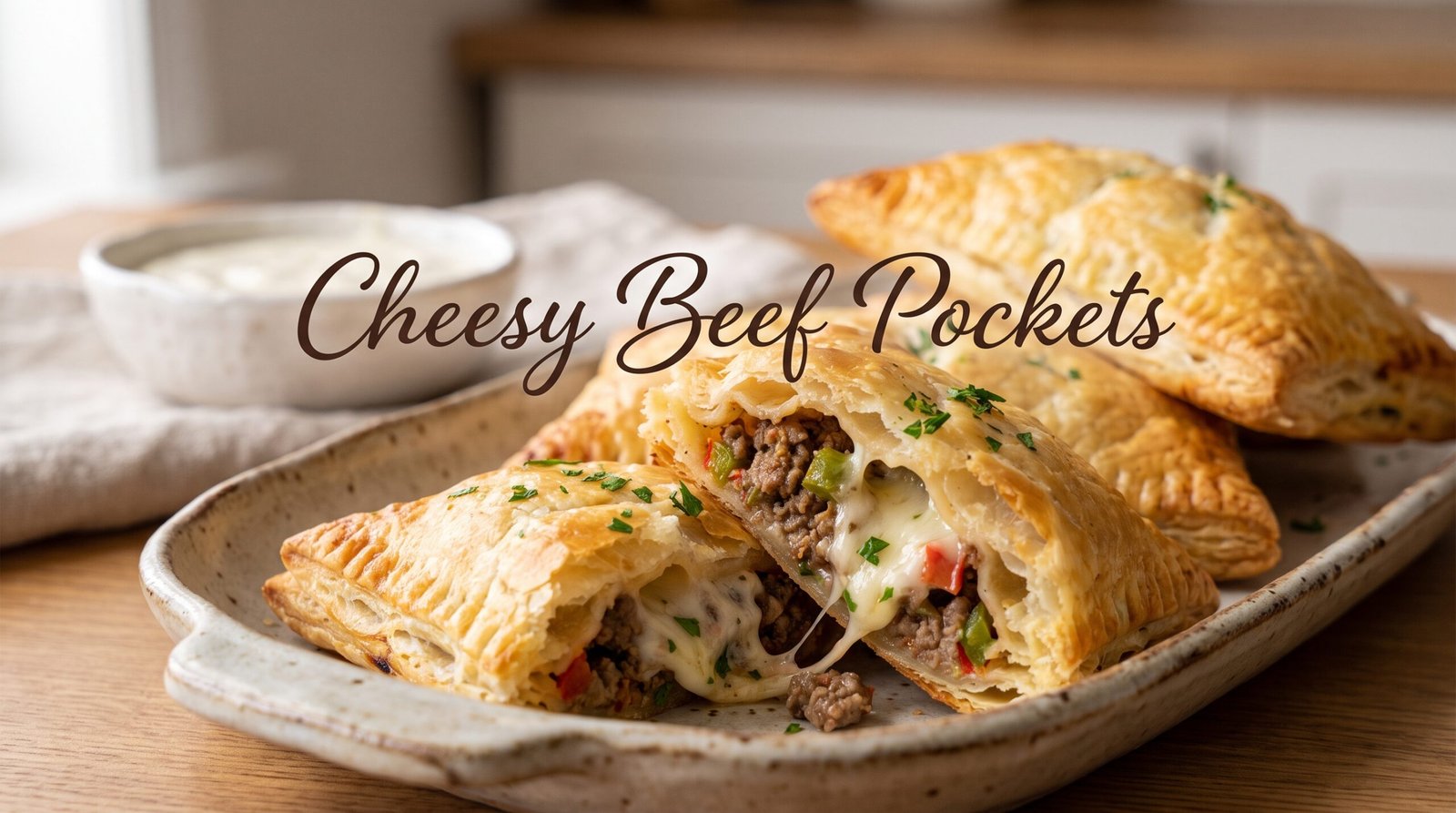
Cheesy Beef Pockets: Easy Baked Beef Pockets Recipe
Golden on the outside, warm and cheesy on the inside, these Cheesy Beef Pockets are a delicious way to turn simple ingredients into a satisfying homemade meal. Each pocket is filled with savory seasoned beef and melted cheese, then baked until the pastry becomes beautifully golden and crisp.
This Baked Beef Pockets Recipe is perfect for busy weeknights, family lunches, after-school snacks, or casual gatherings. The filling is easy to prepare, and the pockets can be shaped ahead of time to make mealtime less stressful.
The combination of juicy ground beef, onion, garlic, and gooey cheese creates a rich, comforting flavor in every bite. Ready-made puff pastry keeps preparation simple, so there is no need to spend extra time making dough from scratch.
These beef pockets are also easy to customize. Add bell peppers for extra color, use your favorite halal-friendly cheese, or adjust the seasonings to suit the family. Serve them warm with garlic sauce, ketchup, or a fresh salad for a meal that everyone can enjoy.
Ingredients for Cheesy Beef Pockets
The recipe uses straightforward ingredients that are easy to find in most grocery stores. For the best results, allow the beef filling to cool before placing it inside the pastry.
Ingredients
For the beef filling
- 1 pound (450 g) ground beef: Choose halal-certified beef with a moderate amount of fat for a flavorful filling.
- 1 tablespoon olive oil: Helps cook the beef and vegetables evenly.
- 1 medium onion, finely chopped: Adds sweetness and savory flavor.
- 2 garlic cloves, minced: Gives the filling a rich, aromatic taste.
- 1/2 cup red or green bell pepper, finely diced: Adds color and a mild, fresh flavor.
- 1 tablespoon tomato paste: Creates a deeper, savory flavor without making the filling too wet.
- 1 teaspoon paprika: Adds warmth and color.
- 1/2 teaspoon ground cumin: Gives the beef a gentle earthy flavor.
- 1/2 teaspoon dried oregano: Adds a light herbal note.
- 1/2 teaspoon salt, or to taste: Seasons the filling.
- 1/4 teaspoon black pepper: Adds mild heat.
- 2 tablespoons water: Helps the seasonings combine with the beef.
- 1 tablespoon chopped fresh parsley: Adds freshness.
- 1 teaspoon lemon juice: Brightens the rich beef flavor.
For assembling the pockets
- 1 package puff pastry, about 17.3 ounces (490 g): Use two pastry sheets, thawed according to the package directions. Check that the pastry is suitable for a halal-friendly diet.
- 1 cup (100–115 g) shredded mozzarella cheese: Melts into a soft, stretchy filling.
- 1 large egg: Used for the egg wash. Choose an alternative below if avoiding eggs.
- 1 tablespoon water: Mix with the egg to create a smooth egg wash.
- 1 teaspoon sesame seeds, optional: Adds a light crunch and attractive finish.
Egg-Free Alternative
For an egg-free finish, brush the pastry lightly with milk or an unsweetened plant-based milk suitable for the recipe. The color may be slightly less glossy than an egg wash.
Tools and Equipment
- Large skillet or frying pan
- Wooden spoon or spatula
- Sharp knife and chopping board
- Measuring cups and spoons
- Baking tray
- Parchment paper
- Rolling pin, if needed
- Small bowl for the egg wash
- Pastry brush
- Fork for sealing the edges
- Wire cooling rack
How to Make the Baked Beef Pockets Recipe
These steps keep the filling flavorful and the pastry crisp. Read through the method before starting so the beef has time to cool before assembly.
Step 1: Prepare the Ingredients
Finely chop the onion and bell pepper. Mince the garlic and measure the seasonings.
Remove the puff pastry from the freezer and thaw it according to the package directions. Keep it cool while preparing the filling so it remains easy to handle.
Step 2: Cook the Onion and Bell Pepper
Heat the olive oil in a large skillet over medium heat. Add the chopped onion and bell pepper.
Cook for about 3–4 minutes, stirring occasionally, until the onion softens and the pepper begins to turn tender. Add the minced garlic and cook for another 30 seconds.
Avoid browning the garlic too much, as it can develop a bitter taste.
Step 3: Brown the Ground Beef
Add the ground beef to the skillet. Break it into small pieces with a wooden spoon and cook for about 6–8 minutes, or until fully browned.
Stir regularly so the meat cooks evenly. If the beef releases excess fat, carefully drain it before adding the remaining ingredients.
Cook ground beef to an internal temperature of 160°F (71°C) for food safety.
Step 4: Season the Filling
Stir in the tomato paste, paprika, cumin, oregano, salt, black pepper, and water.
Cook for another 2–3 minutes, stirring until the tomato paste and seasonings coat the beef evenly. The mixture should be moist but not watery.
Turn off the heat and mix in the chopped parsley and lemon juice. Taste the filling and adjust the seasoning if needed.
Step 5: Cool the Beef Mixture
Transfer the cooked beef mixture to a shallow bowl or plate and let it cool until it is no longer steaming heavily.
This step matters because hot filling can soften the pastry and make it difficult to seal. The filling should be cool enough to handle before assembling the pockets.
If preparing ahead, refrigerate the filling promptly in a covered container rather than leaving it at room temperature for an extended period.
Step 6: Prepare the Puff Pastry
Preheat the oven to 400°F (200°C). Line a baking tray with parchment paper.
Place the thawed pastry sheets on a lightly floured surface. If needed, roll them gently to even out the thickness.
Cut the pastry into eight equal rectangles, depending on the size of the sheets. For larger pockets, cut fewer, bigger rectangles.
Keep the pastry cool. If it becomes very soft or sticky, refrigerate it briefly before filling.
Step 7: Add the Beef and Cheese
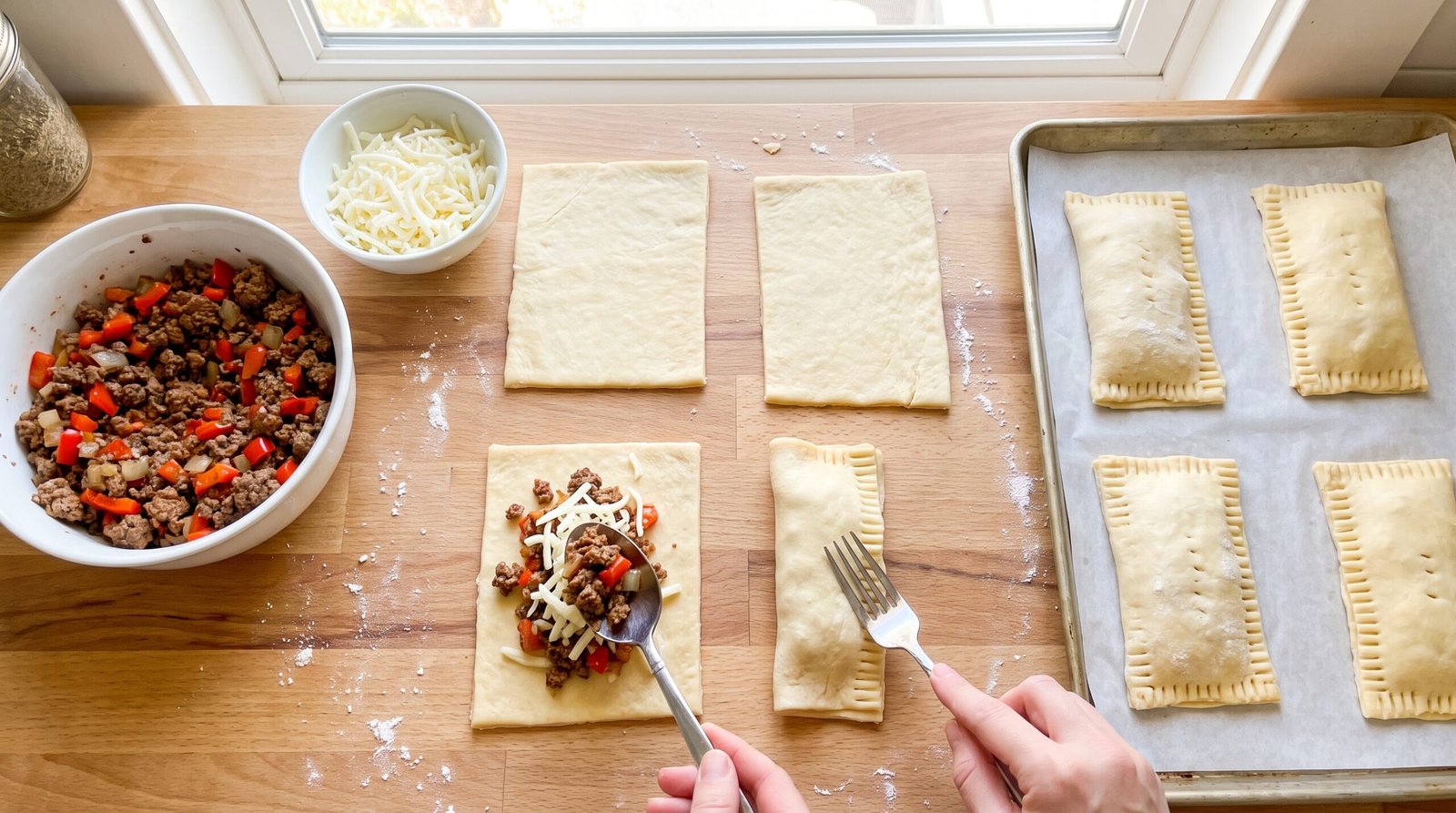
Place a portion of the cooled beef filling on one side of each pastry rectangle, leaving a clear border around the edges.
Sprinkle the filling with shredded mozzarella. Distribute the cheese evenly so every pocket gets a creamy, melted center.
Do not overfill the pastry. Too much filling makes the edges harder to seal and can cause the pockets to open during baking.
Step 8: Fold and Seal the Pockets
Fold the empty half of each rectangle over the filling to form a smaller rectangle. Press the edges together gently.
Use a fork to crimp the edges and seal them firmly. If the pastry edges look dry, lightly moisten them with a little water before pressing them together.
Place the pockets on the prepared baking tray with space between them. This allows the hot air to circulate and helps the pastry bake evenly.
Step 9: Apply the Egg Wash
Whisk the egg with one tablespoon of water in a small bowl.
Brush a thin layer over the top of each pocket, avoiding excessive liquid around the sealed edges. Sprinkle with sesame seeds if desired.
The egg wash helps the pastry develop a shiny, golden-brown finish. For an egg-free version, brush lightly with milk instead.
Step 10: Bake Until Golden
Bake the pockets for approximately 20–25 minutes, or until the pastry has puffed up and turned golden brown.
Cooking time may vary depending on the size of the pockets and the type of pastry used. Check the bottoms as well as the tops to ensure they are cooked through.
The filling has already been cooked, so the main goal is to bake the pastry fully and heat the center thoroughly.
Step 11: Rest and Serve
Remove the tray from the oven and let the beef pockets rest for about 5 minutes.
The filling and melted cheese will be very hot immediately after baking. A short resting period makes the pockets easier to handle while keeping the cheese soft and delicious.
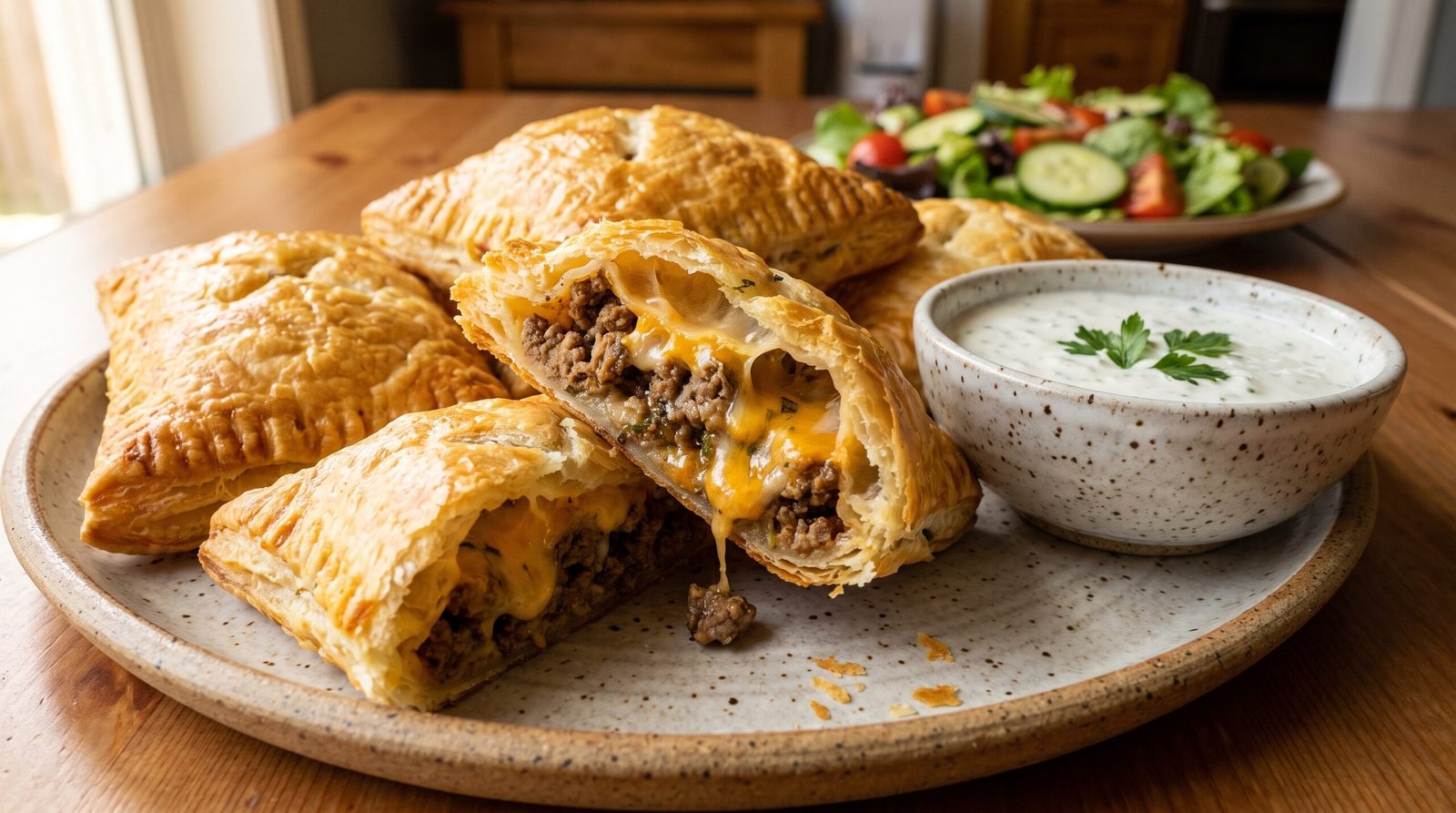
Serve warm with a favorite dipping sauce or a simple side salad.
Tips for Perfect Cheesy Beef Pockets
Cool the Filling Before Assembly
Warm filling can melt the pastry fat before baking, reducing the flaky texture. Cooling also makes the mixture easier to portion neatly.
For quicker cooling, spread the cooked beef in a shallow dish rather than leaving it in the hot skillet.
Keep the Filling Fairly Dry
A watery filling can make the pastry soggy and weaken the seams. Cook off excess liquid before removing the beef mixture from the heat.
If the filling still looks wet, drain excess liquid and let it cool uncovered briefly in a shallow dish, then refrigerate promptly if it will not be used soon.
Seal Every Edge
Press the edges firmly and crimp them with a fork. A good seal helps keep the melted cheese and beef inside the pastry.
Avoid placing the filling too close to the edges, where it can interfere with sealing.
Work with Cool Pastry
Puff pastry becomes difficult to handle when it gets too warm. If it feels greasy, limp, or sticky, place it in the refrigerator for several minutes.
Cool pastry is easier to fold and generally produces a better rise in the oven.
Leave Space on the Baking Tray
Arrange the pockets with a little room between them. Overcrowding can trap steam and make the sides less crisp.
Use two trays if necessary, and rotate the trays during baking if the oven heats unevenly.
Choose Cheese That Melts Well
Mozzarella creates a stretchy, mild filling. Cheddar gives a stronger flavor, while a mixture of mozzarella and cheddar offers both stretch and richness.
Choose halal-suitable cheese and check that the enzymes used are acceptable for your dietary requirements.
Easy Variations for Homemade Beef Pockets
The filling can be changed easily without making the preparation complicated.
Cheesy Beef and Cheddar Pockets
Replace half or all of the mozzarella with shredded cheddar. The cheddar adds a sharper, richer flavor that pairs well with the seasoned beef.
For a milder result, combine equal amounts of cheddar and mozzarella.
Spicy Beef Pockets
Add 1/4 teaspoon of chili flakes or a small amount of finely chopped green chili to the beef mixture.
Adjust the heat to suit the family. The cheese helps balance the spice and gives the filling a creamy finish.
Beef and Mushroom Pockets
Add 1/2 cup of finely chopped mushrooms to the skillet after softening the onion and bell pepper. Cook until the mushrooms release their moisture and become tender.
Allow the mixture to become fairly dry before adding the beef filling to the pastry.
Beef and Spinach Pockets
Stir in 1/2 cup of chopped spinach after the beef has cooked. If using frozen spinach, thaw it first and squeeze out excess water.
Spinach adds color and flavor without overpowering the beef and cheese.
Homemade Dough Alternative
If puff pastry is unavailable, use a simple savory pastry dough or prepared pizza dough. Roll it out evenly, fill, seal, and bake according to the dough’s instructions.
The texture will be different: puff pastry is light and flaky, while pizza dough creates a softer, bread-like pocket.
Mini Beef Pockets for Parties
Cut the pastry into smaller squares and use a small spoonful of filling in each one. Seal the edges carefully and begin checking for doneness earlier than the full-size version.
Mini pockets are easy to serve on a platter with several dips.
Common Mistakes to Avoid
Adding hot filling: Hot beef softens the pastry and makes sealing harder. Cool the filling before assembling.
Overfilling the pastry: Too much beef and cheese can cause the pockets to split. Use a moderate amount and leave a clear border.
Skipping the edge seal: Loose edges allow melted cheese to escape. Press firmly and crimp with a fork.
Using pastry that is too warm: Warm pastry may become sticky and fail to puff as well. Chill it briefly if needed.
Removing the pockets too early: Pale or underbaked pastry may be doughy inside. Bake until the pastry is well risen and golden.
Storage and Serving Suggestions
How to Store Leftover Beef Pockets
Let the pockets cool briefly, then refrigerate them in a shallow, airtight container within two hours of cooking.
Keep them at 40°F (4°C) or below and eat within three to four days. For the best texture, store dipping sauces separately.
Can Beef Pockets Be Frozen?
Yes. Baked beef pockets freeze well when properly cooled and packed.
Arrange them in a single layer until firm, then transfer them to a freezer-safe container or bag. Separate layers with parchment paper to prevent sticking.
For best quality, use within two to three months. Label the package with the date so leftovers are easy to track.
For convenient meal preparation, the beef filling can also be cooked ahead and refrigerated for up to three to four days, provided it is cooled and stored safely. Assemble the pockets when ready to bake.
How to Reheat Beef Pockets
Oven: Preheat to 350°F (175°C). Place the pockets on a baking tray and heat for about 10–15 minutes, or until hot throughout.
Air fryer: Heat at 325–350°F (160–175°C) for about 4–8 minutes, depending on size and appliance.
Microwave: Heat in short intervals until hot throughout. This is quick, but the pastry will be softer rather than flaky.
Reheat leftovers to an internal temperature of 165°F (74°C). Avoid repeatedly reheating the same portion.
What to Serve with Cheesy Beef Pockets
These pockets are rich and savory, so simple sides work especially well.
- Fresh garden salad: Lettuce, cucumber, tomatoes, and a light dressing add freshness.
- Garlic yogurt sauce: A cool, creamy dip that complements the seasoned beef.
- Homemade garlic sauce: Adds a punch of savory flavor.
- Tomato ketchup: A familiar, slightly sweet dip that works well with cheesy pastry.
- Roasted vegetables: Serve with carrots, broccoli, or bell peppers for a balanced plate.
- Potato wedges: Make the meal heartier and especially satisfying.
- Cucumber and yogurt salad: Offers a refreshing contrast to the warm, flaky pockets.
For a party, arrange the pockets on a serving tray with small bowls of dipping sauces. For a family dinner, serve two pockets per person with a fresh salad or roasted vegetables, adjusting portions to appetite.
For more easy meal ideas, try these related recipes: crispy chicken wraps, homemade garlic yogurt sauce, and easy savory pastry snacks.
Frequently Asked Questions
1. Can store-bought puff pastry be used for beef pockets?
Yes. Store-bought puff pastry is a convenient choice and saves preparation time. Thaw it according to the package directions and keep it cool until the pockets are ready to assemble.
2. What cut of beef works best for this recipe?
Ground beef is the easiest option because it cooks quickly and fits neatly inside the pastry. Choose halal-certified ground beef with enough fat to provide flavor, then drain any excess fat after browning.
3. Can beef pockets be made without cheese?
Yes. Simply leave out the cheese or replace it with a suitable dairy-free melting alternative. The filling will still be savory, although it will not have the same creamy texture.
4. How can the pastry become extra flaky?
Keep the pastry cold before baking, avoid stretching it during assembly, and preheat the oven fully. A hot oven helps the layers puff and turn golden.
5. Can the pockets be prepared the night before?
Yes. Assemble them, place them in a covered container, and refrigerate promptly. For the best rise, brush with egg wash just before baking and bake them while the pastry is still cool.
6. Why did the cheese leak out during baking?
Cheese may leak if the pockets are overfilled or the seams are not firmly sealed. Leave space around the filling, press the edges together carefully, and crimp them with a fork.
7. Can frozen beef pockets be baked without thawing?
Fully baked frozen pockets can generally be reheated from frozen in an oven, although they need additional time. Check the center reaches 165°F (74°C). For unbaked pockets, follow the pastry manufacturer’s guidance because baking directly from frozen may require adjustments.
8. How can this recipe be made dairy-free?
Use a suitable dairy-free puff pastry, replace the mozzarella with a dairy-free melting cheese, and check all ingredient labels. Some puff pastry contains butter, so not every package is dairy-free.
9. Can another meat be used instead of ground beef?
Yes. Ground halal chicken or turkey can be used, although both may cook more quickly and produce a leaner filling. Cook poultry to 165°F (74°C) and adjust the seasonings as desired.
10. How do you know when the beef pockets are ready?
The pastry should be puffed, golden, and cooked through rather than pale or doughy. Since the beef filling is cooked first, also check that the center is hot throughout before serving.
Conclusion
These Cheesy Beef Pockets are a simple, satisfying way to enjoy seasoned ground beef, melted cheese, and crisp, golden pastry in one easy recipe. The ingredients are familiar, the preparation is straightforward, and the filling can be adjusted to suit different tastes.
Serve them as a quick lunch, a family dinner, or a party snack with a favorite dipping sauce. Bake a batch ahead for busy days, or make mini pockets when entertaining guests.
Save this Baked Beef Pockets Recipe for the next time a warm, cheesy homemade meal sounds appealing. Give it a try, share the pockets with family and friends, and enjoy every flaky, savory bite.
Leave a Reply