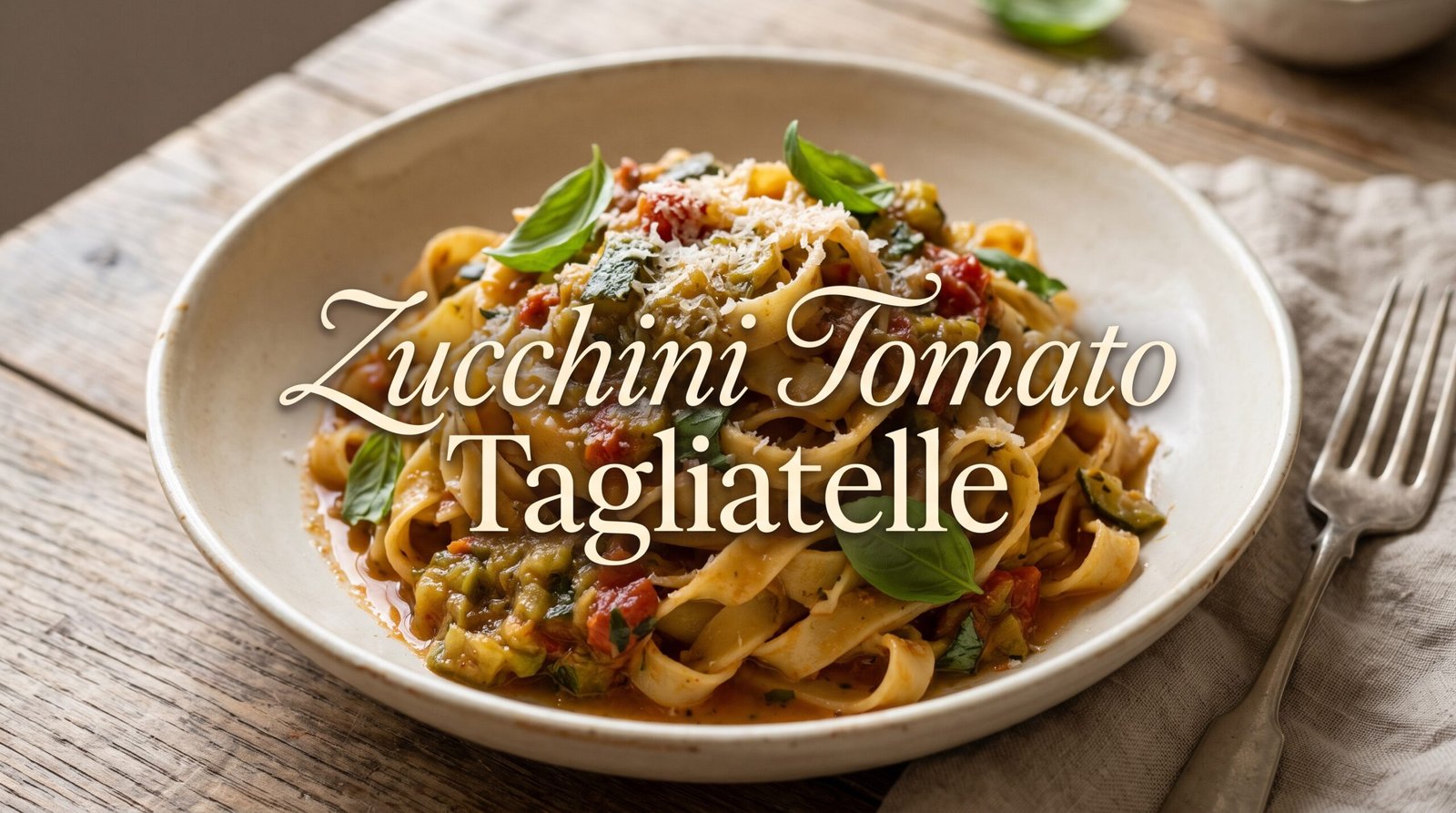
Tagliatelle with Mashed Zucchini and Tomato Sauce: Easy Zucchini Pasta
Looking for a comforting pasta dinner that tastes fresh, rich, and delicious without requiring hours in the kitchen? This tagliatelle with mashed zucchini and tomato sauce is a simple recipe that brings tender pasta, soft zucchini, and a savory tomato sauce together in one satisfying meal.
The secret is cooking the zucchini until it becomes tender enough to mash into a soft, creamy texture. Combined with garlic, olive oil, and sweet tomatoes, it creates a flavorful sauce that coats every ribbon of tagliatelle beautifully.
This zucchini pasta is ideal for busy weeknights, relaxed family dinners, or any occasion when a homemade meal sounds good but complicated cooking does not. The ingredients are easy to find, the preparation is beginner-friendly, and the finished dish feels comforting without being too heavy.
Unlike pasta recipes that rely on cream, this dish gets its smooth texture from mashed zucchini and a little starchy pasta water. The tomatoes add brightness, while the zucchini brings a gentle sweetness that balances the sauce.
It is also easy to adapt. Add a little chili for warmth, sprinkle Parmesan over the top, or serve it with a fresh green salad for a complete meal. With its colorful sauce and silky pasta, this is one of those easy dinner recipes that can become a regular favorite.
Ingredients for Zucchini Pasta
Serves 4 · Prep time: 15 minutes · Cook time: 25 minutes · Total time: 40 minutes
This recipe uses fresh zucchini, pantry-friendly tomatoes, and tagliatelle to create a smooth, flavorful sauce. The measurements below provide a balanced combination of vegetables, pasta, and seasonings without making the dish complicated.
Ingredients
- 12 oz (340 g) dried tagliatelle pasta
- 2 medium zucchini, about 500 g total
- 1 can (14 oz / 400 g) crushed tomatoes
- 3 tablespoons extra-virgin olive oil
- 3 garlic cloves, finely minced
- 1 small yellow onion, finely chopped
- 1 teaspoon dried oregano
- 1/2 teaspoon dried basil
- 1/4 teaspoon red chili flakes, optional
- 1 teaspoon salt, or to taste
- 1/2 teaspoon freshly ground black pepper
- 1/2 teaspoon sugar, optional, to balance acidic tomatoes
- 1/2 cup (120 ml) reserved pasta cooking water, as needed
- 1/4 cup (25 g) finely grated Parmesan cheese, optional
- 2 tablespoons chopped fresh basil, for garnish
Tools and Equipment
- Large pot for boiling pasta
- Large skillet or deep frying pan
- Colander
- Wooden spoon or silicone spatula
- Sharp knife and cutting board
- Fork or potato masher
- Measuring cups and spoons
- Cheese grater, if using Parmesan
Step-by-Step Instructions
Step 1: Prepare the Vegetables
Wash the zucchini thoroughly and trim off both ends. Cut each zucchini into small cubes so the pieces soften evenly during cooking.
Finely chop the onion and mince the garlic. Keep the prepared vegetables close to the stove to make the cooking process smooth and easy.
Step 2: Boil the Tagliatelle
Bring a large pot of water to a boil. Add enough salt to season the pasta, then add the tagliatelle.
Cook according to the package instructions until the pasta is al dente, meaning tender but still slightly firm in the center. Stir occasionally to prevent the ribbons from sticking together.
Before draining, reserve about 1/2 cup of pasta water. Drain the pasta without rinsing it.
The reserved water contains starch that helps the zucchini and tomato sauce cling to the tagliatelle.
Step 3: Sauté the Onion and Garlic
While the pasta cooks, heat the olive oil in a large skillet over medium heat.
Add the chopped onion and cook for 3–4 minutes, stirring occasionally, until it softens and becomes translucent.
Add the minced garlic and cook for another 30–60 seconds. Stir continuously and avoid browning the garlic, as burnt garlic can make the sauce taste bitter.
Step 4: Cook the Zucchini Until Soft
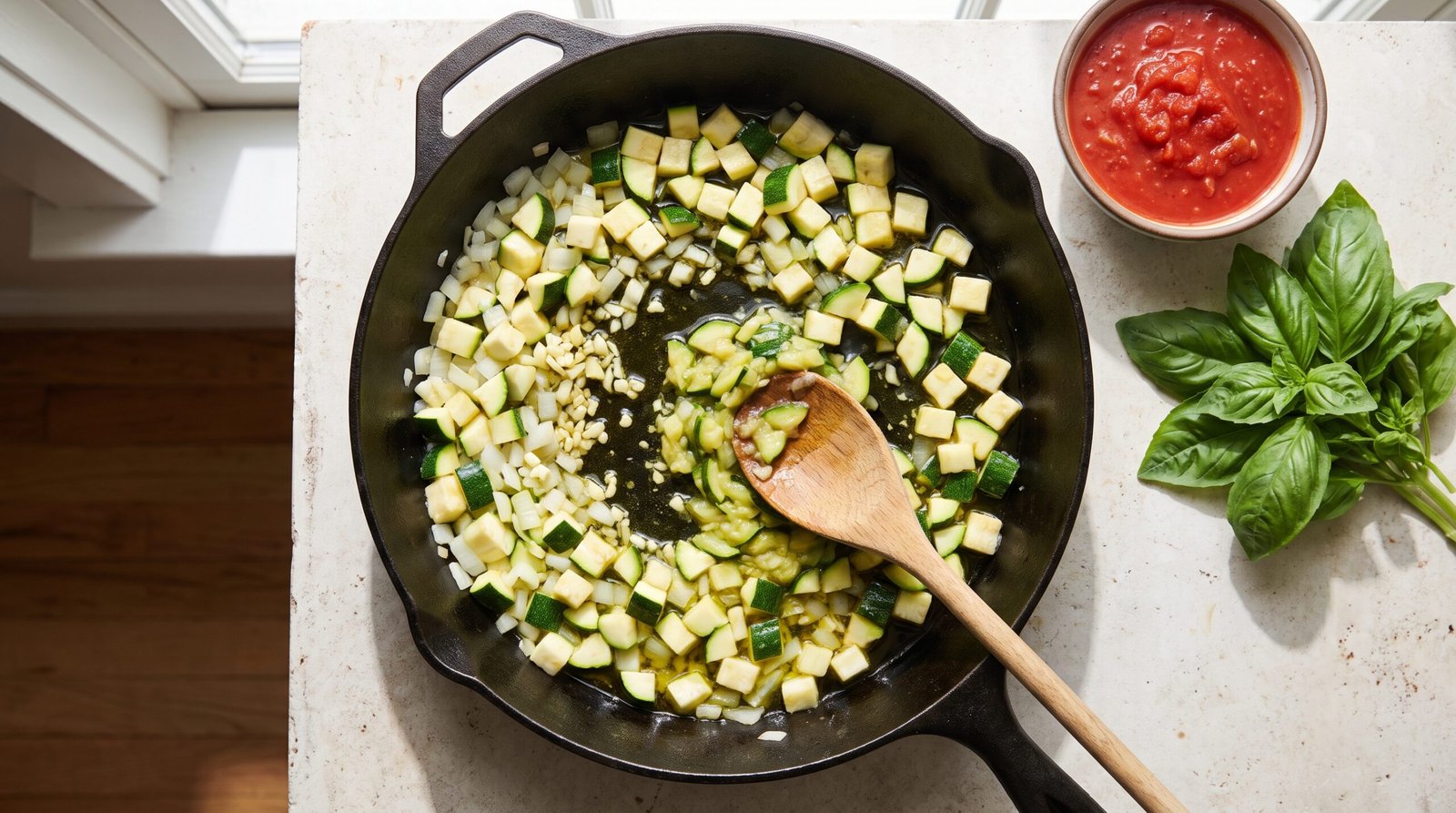
Add the cubed zucchini to the skillet. Sprinkle in the salt, black pepper, dried oregano, dried basil, and optional chili flakes.
Stir everything together so the zucchini is coated in the seasoned oil. Cook for 8–10 minutes, stirring occasionally.
The zucchini should become soft enough to crush easily with the back of a spoon. If the pan looks dry before the zucchini softens, add a tablespoon or two of water and continue cooking.
Step 5: Mash the Zucchini
Once the zucchini is tender, use a fork or potato masher to crush most of the pieces directly in the skillet.
Mash until the mixture becomes soft and slightly creamy, leaving a few small pieces for texture. There is no need to create a completely smooth purée.
This step gives the sauce its thick, velvety consistency without adding cream.
Step 6: Add the Tomato Sauce
Pour the crushed tomatoes into the skillet and stir well to combine them with the mashed zucchini.
Add the optional sugar if the tomatoes taste particularly acidic. Bring the sauce to a gentle simmer, then reduce the heat to medium-low.
Cook uncovered for 8–10 minutes, stirring occasionally. The sauce should thicken slightly, and the tomato flavor should become richer as it combines with the zucchini, garlic, and herbs.
Taste the sauce and adjust the salt, black pepper, or chili flakes as needed.
Step 7: Combine the Pasta and Sauce
Add the drained tagliatelle directly to the skillet. Toss gently using tongs or two large forks until the pasta ribbons are evenly coated.
Pour in a little reserved pasta water, starting with 2 tablespoons. Toss again and add more water gradually if the sauce looks too thick.
The finished sauce should cling to the pasta without becoming watery. Allow everything to cook together for 1–2 minutes so the flavors blend.
Step 8: Finish and Serve
Turn off the heat. Sprinkle over the grated Parmesan, if using, and gently toss until incorporated.
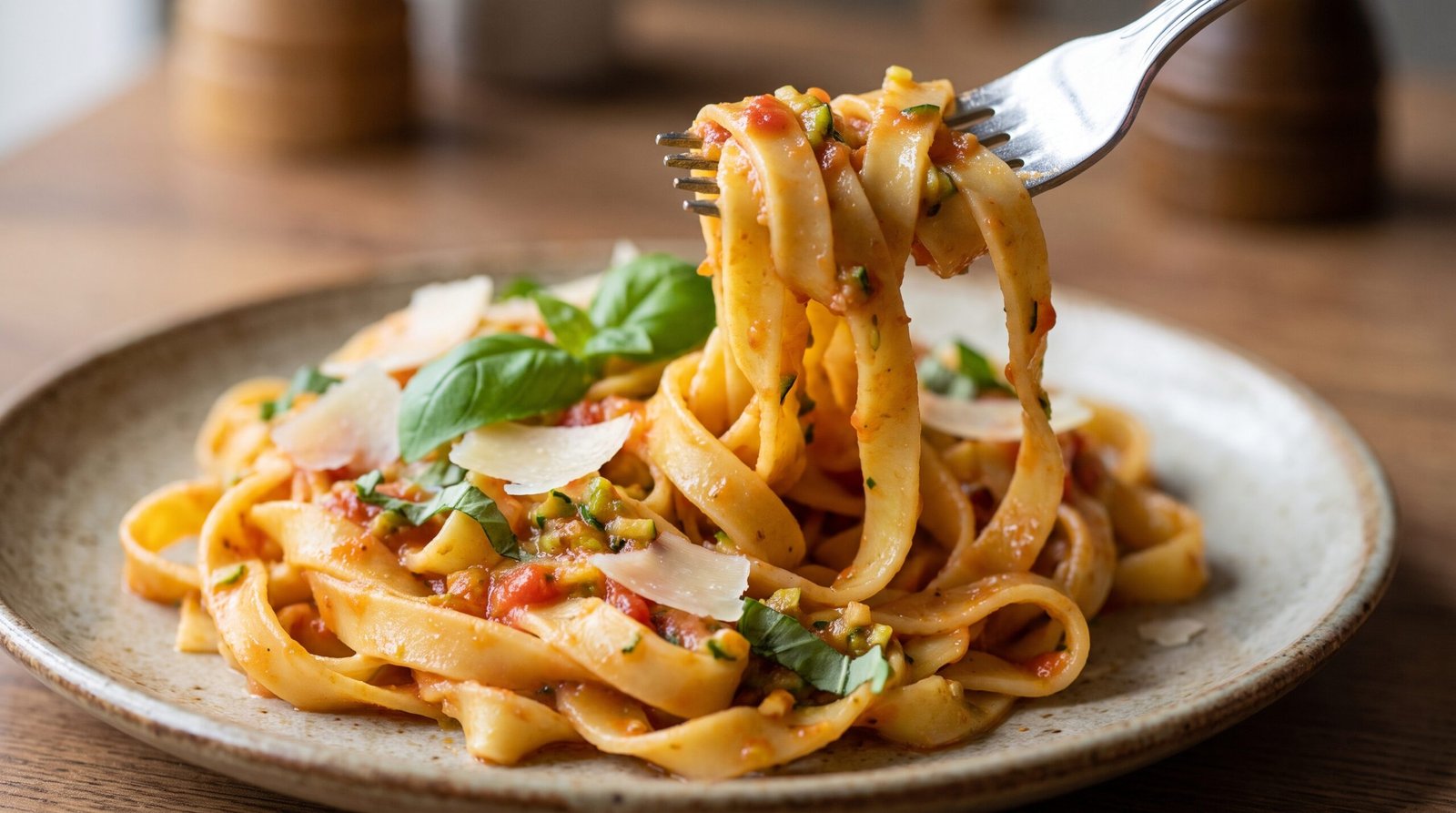
Divide the pasta between serving plates and finish with chopped fresh basil. Add a little extra black pepper or Parmesan on top if desired.
Serve immediately while the tagliatelle is warm, tender, and coated in the creamy zucchini and tomato sauce.
Tips and Variations
Choose the Right Pasta
Tagliatelle works particularly well because its wide, flat ribbons hold the thick sauce beautifully. However, this recipe also works with fettuccine, linguine, spaghetti, penne, or rigatoni.
Short pasta shapes are especially useful when serving young children because they are easy to portion and eat.
Mash the Zucchini While It Is Hot
Warm zucchini is much easier to mash than zucchini that has cooled. Crush it directly in the skillet once it becomes fork-tender.
For a smoother sauce, mash nearly all the zucchini. For a more rustic texture, leave some small chunks intact.
Avoid Overcooking the Pasta
Overcooked tagliatelle can become soft and sticky, especially after it is tossed with the hot sauce. Cook the pasta just until al dente, then finish it in the skillet for a minute or two.
If the pasta package gives a cooking range, check it at the earlier end of that range.
Use Pasta Water for a Silky Sauce
Do not pour all the pasta water down the drain. Its starch helps the sauce cling to the pasta and creates a smoother finish.
Add it gradually rather than all at once. Too much water can dilute the tomato flavor and make the sauce runny.
Adjust the Tomato Flavor
Different canned tomatoes have different levels of sweetness and acidity. Taste the sauce before adding sugar.
If it tastes balanced already, leave the sugar out. A little extra simmering can also soften the sharp flavor of the tomatoes.
Make It Spicy
For a warmer, more robust tomato pasta, increase the chili flakes to 1/2 teaspoon or add a pinch of cayenne pepper.
Keep the spice level mild for a family-friendly meal, then offer extra chili flakes at the table.
Add More Vegetables
Finely chopped mushrooms, spinach, or diced red bell pepper can add extra flavor and variety.
Cook mushrooms with the onion until their moisture evaporates. Add spinach near the end of the sauce-cooking stage so it wilts without becoming overly soft.
Make It Dairy-Free
Simply omit the Parmesan cheese. The mashed zucchini and starchy pasta water already give the sauce a soft, creamy texture.
For a dairy-free finishing touch, sprinkle toasted breadcrumbs or finely chopped fresh basil over the finished pasta.
Make It More Filling
For additional protein, serve the pasta with grilled chicken, cooked chickpeas, or white beans. Add fully cooked ingredients to the sauce just before combining it with the pasta.
For another easy meal idea, serve this dish alongside homemade garlic bread or a fresh Mediterranean salad.
Common Mistakes to Avoid
- Adding zucchini before the onion softens: Cooking the onion first develops a sweeter, more rounded base.
- Mashing undercooked zucchini: Firm pieces will not create a smooth sauce. Cook until they crush easily.
- Leaving the sauce too watery: Simmer uncovered until it thickens before adding the pasta.
- Adding all the pasta water immediately: Add small amounts as needed to maintain the right consistency.
- Using too much salt: Salt the pasta water moderately and taste the sauce before adding more.
- Leaving the pasta in the hot pan too long: Serve promptly to prevent the ribbons from becoming overly soft.
Storage and Serving
How to Store Leftover Zucchini Pasta
Allow the pasta to cool slightly before transferring it to an airtight container. Refrigerate within two hours of cooking, or sooner in a very warm environment.
Store leftovers in the refrigerator for up to 3–4 days. Keep the pasta covered to prevent it from drying out or absorbing other refrigerator odors.
For the best flavor and texture, store any extra fresh basil separately and add it just before serving.
Can Zucchini Pasta Be Frozen?
The tomato and zucchini sauce can be frozen separately for up to 3 months in a freezer-safe container. Leave a little space at the top for expansion and label the container with the date.
Freezing the finished pasta is also possible, but the tagliatelle may become softer after thawing. For the best results, freeze the sauce and cook fresh pasta when ready to serve.
Thaw frozen sauce overnight in the refrigerator before reheating.
How to Reheat Leftovers
Place the pasta in a skillet over low to medium-low heat. Add 1–2 tablespoons of water and stir gently until heated throughout.
Add another splash of water if the sauce has thickened too much in the refrigerator. Avoid overheating, as the pasta can break apart and the zucchini sauce may become dry.
For microwave reheating, place a portion in a microwave-safe dish, cover loosely, and heat in short intervals, stirring between each interval until steaming hot.
What to Serve with Tagliatelle and Tomato Sauce
This dish is satisfying on its own, but a few simple sides can turn it into a complete dinner.
- Garlic bread: Crispy edges and a soft center make it perfect for scooping up leftover sauce.
- Green salad: Fresh lettuce, cucumber, and a lemon dressing balance the rich tomato flavor.
- Roasted vegetables: Roasted carrots, bell peppers, or broccoli add color and extra texture.
- Grilled chicken: A simple, seasoned chicken breast makes the meal more substantial.
- Extra Parmesan: A light sprinkle adds a salty, savory finish.
For a relaxed family dinner, serve the pasta straight from the skillet with fresh basil and grated cheese on the side.
Frequently Asked Questions
1. Can fresh tomatoes be used instead of canned tomatoes?
Yes. Use approximately 450–500 g of ripe, chopped tomatoes in place of the canned tomatoes. Fresh tomatoes may release more water, so allow extra simmering time until the sauce reaches the desired thickness.
2. Do zucchini need to be peeled before cooking?
No. The skin is edible and softens during cooking. Leaving it on also adds color and helps the finished sauce look fresh and appealing.
Choose firm zucchini with smooth skin and wash them thoroughly before cutting.
3. How can the sauce be made creamier without cream?
Mash the cooked zucchini thoroughly and add reserved pasta water a little at a time. Tossing the pasta with the sauce over low heat helps the starch bind everything together.
A small amount of grated Parmesan can add extra richness, but it is optional.
4. Is this recipe suitable for meal prep?
Yes. The tomato and zucchini sauce can be prepared ahead and refrigerated for up to 3–4 days. For the best pasta texture, cook the tagliatelle shortly before serving and combine it with the reheated sauce.
This approach also makes weeknight cooking quicker.
5. Can frozen zucchini be used?
Yes, although frozen zucchini may release more water and have a softer texture. Thaw it first and drain excess liquid before cooking.
Cook it until the extra moisture evaporates, then mash and continue with the tomato sauce.
6. What can replace tagliatelle?
Fettuccine, linguine, spaghetti, penne, and rigatoni are all suitable alternatives. Choose a pasta shape that holds sauce well and follow the cooking instructions on its package.
Whole-wheat pasta can also be used for a slightly nuttier flavor and firmer bite.
7. Why does the zucchini sauce taste watery?
Zucchini naturally contains a lot of water. If the sauce is thin, simmer it uncovered for a few extra minutes to allow excess moisture to evaporate.
Avoid adding too much pasta water at once, and wait until the zucchini is tender before mashing it.
8. Can this recipe be made vegan?
Yes. The recipe is vegan when the Parmesan is omitted or replaced with a suitable plant-based alternative. Check the pasta packaging to ensure it contains no egg if a fully vegan meal is required.
The olive oil, zucchini, tomatoes, garlic, and herbs provide plenty of flavor without dairy.
9. How can the dish be made more flavorful?
Allow the onion and garlic to soften properly before adding the zucchini. Season the sauce gradually, and let the tomatoes simmer long enough to develop a deeper flavor.
Fresh basil added just before serving provides a fragrant finish.
10. Is zucchini pasta suitable for children?
Yes. The soft zucchini and familiar tomato flavor make this a family-friendly option. Leave out the chili flakes for a mild version and cut the pasta into smaller portions if needed.
The mashed zucchini also blends into the sauce, making it a simple way to include another vegetable in dinner.
Conclusion
Tagliatelle with mashed zucchini and tomato sauce is a comforting, colorful dinner made with everyday ingredients and simple cooking techniques. The tender pasta, sweet zucchini, fragrant garlic, and rich tomato sauce create a satisfying combination without the need for heavy cream or complicated preparation.
Whether served as a quick weeknight meal or a relaxed weekend dinner, this recipe is easy to customize with different pasta shapes, vegetables, and toppings.
Give this zucchini pasta a try whenever a fresh, homemade meal is needed. Finish it with fragrant basil, a little Parmesan if desired, and warm garlic bread on the side. Save the recipe for later and share it with anyone who enjoys simple, delicious pasta dinners.
Leave a Reply